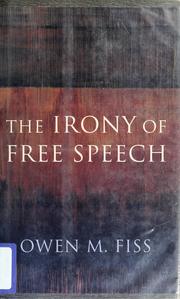
The irony of free speech
Owen M. Fiss · 1996
על הספר
How free is the speech of someone who can't be heard? Not very - and this, Owen Fiss suggests, is where the First Amendment comes in. In this book, a marvel of conciseness and eloquence, Fiss reframes the debate over free speech to reflect the First Amendment's role in ensuring public debate that is, in Justice William Brennan's words, truly "uninhibited, robust, and wide-open.". By examining the silencing effects of speech - its power to overwhelm and intimidate the underfunded, underrepresented, or disadvantaged voice - Fiss shows how restrictions on political expenditures, hate speech, and pornography can be defended in terms of the First Amendment, not despite it. Similarly, when the state requires the media to air voices of opposition, or funds art that presents controversial or challenging points of view, it is doing its constitutional part to protect democratic self-rule from the aggregations of private power that threaten it. Where most liberal accounts cast the state as the enemy of freedom and the First Amendment as a restraint, this one reminds us that the state can also be the friend of freedom, protecting and fostering speech that might otherwise die unheard, depriving our democracy of the full range and richness of its expression.
פרטי הספר
- שנה
- 1996
- שפה
- English
- הוצאה
- Harvard University Press
- מהדורות
- 1
- עמודים
- 98
- ISBN
- 9780674466616
מקור הנתונים: Wikidata
עוד של Owen M. Fiss