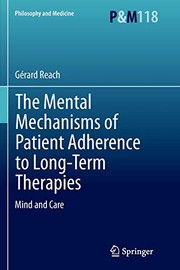
The Mental Mechanisms of Patient Adherence to Long-Term Therapies
Gérard Reach · 2015
על הספר
The goal of this book is to describe the mechanisms of patients’ adherence to long-term therapies, whose improvement, according to the World Health Organization (WHO), would be more beneficial than any biomedical progress. For example, approximately half of the patients do not regularly follow medical prescriptions, resulting in deleterious effects on people’s health and a strong impact on health expenditure. This book describes how our beliefs, desires, and emotions intervene in our choices concerning our health, by referring to concepts developed within the framework of the philosophy of mind. In particular, it tries to explain how we can choose between an immediate pleasure and a remote reward—preserving our health and our life. We postulate that such an “intertemporal” choice can be directed by a “principle of foresight” which leads us to give priority to the future. Just like patients’ non-adherence to prescribed medications, doctors often don’t always do what they should: They are non-adherent to good practice guidelines. We propose that what was recently described as “clinical inertia” could also represent a case of myopia: From time to time doctors fail to consider the long-term interests of their patient. Both patients’ non-adherence and doctors’ clinical inertia represent major barriers to the efficiency of care. However, it is also necessary to respect patients’ autonomy. The analysis of relationship between mind and care which is provided in this book sheds new light on the nature of the therapeutic alliance between doctor and patient, solving the dilemma between the ethical principles of beneficence and autonomy.
פרטי הספר
- שנה
- 2015
- שפה
- English
- הוצאה
- Springer
- מהדורות
- 4
- עמודים
- 207
- ISBN
- 9783319122649
מקור הנתונים: Wikidata