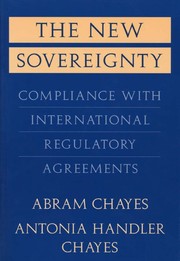
The new sovereignty
Abram Chayes · 1996
על הספר
In an increasingly complex and interdependent world, states resort to a bewildering array of regulatory agreements to deal with problems as disparate as climate change, nuclear proliferation, international trade, satellite communications, species destruction, and intellectual property. In such a system, there must be some means of ensuring reasonably reliable performance of treaty obligations. The standard approach to this problem, taken by academics and politicians alike, is to search for treaties with "teeth"--Military or economic sanctions to deter and punish violation. The New Sovereignty argues that this approach is misconceived. Cases of coercive enforcement are rare, and sanctions are too costly and difficult to mobilize to be a reliable enforcement tool. As an alternative to this "enforcement" model, the authors propose a "managerial" model for ensuring treaty compliance. It relies on the elaboration and application of treaty norms in a continuing dialogue among the parties, international officials, and nongovernmental organizations - and it is this dialogue that generates pressure to resolve problems of noncompliance. In the process, the norms and practices of the regime themselves evolve and develop.
פרטי הספר
- שנה
- 1996
- שפה
- English
- הוצאה
- Harvard University Press
- מהדורות
- 3
- עמודים
- 417
- ISBN
- 9780674617827
מקור הנתונים: Wikidata