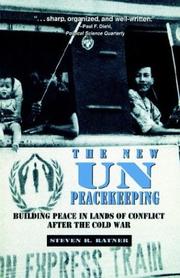
The New UN peacekeeping
Steven R. Ratner · 1995
על הספר
As the United Nations passes its fiftieth anniversary, it has undergone a sea change in its approach toward peacekeeping. Originally a stopgap measure to preserve a cease-fire, peacekeeping since the waning of the Cold War has become a means to implement agreed political solutions to conflicts between antagonists. Placed inside war-torn states, UN peacekeepers have encountered new challenges as they oversee elections, protect human rights, and reconstruct governmental institutions. In this study, Steven R. Ratner offers a comprehensive framework for scholars, policymakers, and all those seeking to understand this new peacekeeping. He sees the UN as an administrator, mediator, and guarantor of political settlements - roles that can conflict when peace accords unravel, as is all too common. He describes the numerous actors, inside and outside the UN, who are engaged in this process, often with competing interests. And in a historical review, beginning with the League of Nations, he reveals many striking precedents long before the 1990s. In the central case study, Ratner applies his thesis to the most ambitious UN operation completed, the Cambodia mission of 1991-93. After reconstructing the process leading to the massive UN role, he reviews and appraises its performance, offering a sophisticated critique demonstrating the dangers of quick "success" or "failure" verdicts. With the experiences of those operations in mind, he concludes with a set of compelling recommendations for the UN's members.
המשפט הראשון: The ongoing experiment of the international community in peacekeeping through the United Nations has followed a long and inconstant course through the Organization's history.
פרטי הספר
- שנה
- 1995
- שפה
- English
- הוצאה
- Palgrave Macmillan
- מהדורות
- 2
- עמודים
- 320
- ISBN
- 9780312164485
מקור הנתונים: Wikidata