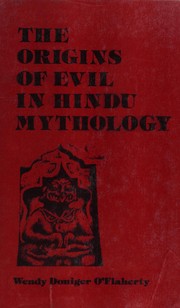
The origins of evil in Hindu mythology
Wendy Doniger · 1976
על הספר
In this pertinent and valuable study O'Flaherty answers the crucial questions such as, what solutions did the Hindus offer to the problems of evil? How did these arise and develop historically? And, how if at all can these various solutions be subsumed under a unified world view? The problem of evil, in particular the question of theodicy, has long been overlooked or misunderstood by Indologists, who have maintained that there is no problem of evil in Indian thought, or that it was "solved" by the doctrine of transmigration and karma. Writers on Indian philosophy have touched upon the problem but no one has treated the extensive mythology of evil in Vedic and Puranic texts, which offer the full range of Indian approaches to the problem. The intense emotional weight of the question of evil drove Hindus to generate literally hundreds of diverse and often contradictory alternative answers, presupposing but quickly transcending the logical yet unsatisfying "answer" offered by the doctrine of karma. The very bulk of these texts indicates the importance of the subject in Indian thought, and the failure to take into consideration some of the rather idiosyncratic Indian attitudes to this most basic problem has led to widespread misunderstanding of Indian religious thought in general.
המשפט הראשון: Theodicy, the term used to designate the problem of evil and its attempted resolution, is derived from the Greek theos, god, and dike, justice; its was put into general currency by Leibniz, who used it to signify the defense of the justice of God in face of the fact of evil.
פרטי הספר
- שנה
- 1976
- שפה
- English
- הוצאה
- University of California Press
- מהדורות
- 4
- עמודים
- 424
- ISBN
- 9780520040984
מקור הנתונים: Wikidata
עוד של Wendy Doniger