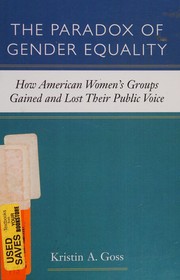
The paradox of gender equality
Kristin A. Goss · 2012
על הספר
"Drawing on original research, Kristin A. Goss examines how women's civic place has changed over the span of more than 120 years, how public policy has driven these changes, and why these changes matter for women and American democracy. Suffrage, which granted women the right to vote and invited their democratic participation, provided a dual platform for the expansion of women's policy agendas. As measured by women's groups' appearances before the U.S. Congress, women's collective political engagement continued to grow between 1920 and 1960 - when many conventional accounts claim it declined - and declined after 1980, when it might have been expected to grow. This waxing and waning was accompanied by major shifts in issue agendas, from broad public interests to narrow feminist interests. Goss suggests that ascriptive differences are not necessarily barriers to disadvantaged groups' capacity to be heard; that enhanced political inclusion does not necessarily lead to greater collective engagement; and that rights movements do not necessarily constitute the best way to understand the political participation of marginalized groups. She asks what women have gained - and perhaps lost - through expanded incorporation as well as whether single-sex organizations continue to matter in 21st-century America."--Jacket.
פרטי הספר
- שנה
- 2012
- שפה
- English
- סדרה
- CAWP series in gender and American politics
- הוצאה
- University of Michigan Press
- מהדורות
- 1
- עמודים
- 240
- ISBN
- 9780472118519
מקור הנתונים: Wikidata