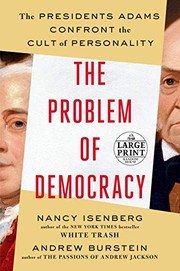
The Problem of Democracy
Nancy Isenberg, Andrew Burstein · 2019
על הספר
"John and John Quincy Adams: rogue intellectuals, unsparing truth tellers, too uncensored for their own political good. They held that political participation demanded moral courage. They did not seek popularity (and it showed). They lamented the fact that hero worship in America substituted idolatry for results, and they made it clear that they were talking about Benjamin Franklin, George Washington, Thomas Jefferson, and Andrew Jackson. John and John Quincy Adams, the second and sixth presidents, father and son, were brilliant, accomplished men who were disparaged throughout their careers. But this book does considerably more than encompass two essential political lives: it takes the temperature of American democracy from its heated origins through multiple storm events, providing major lessons about the excesses of campaign rhetoric that apply all too obviously to our century. It is a fact that the United States, as originally constituted, was not (nor was even meant to be) a democracy. How we got from there to today's unchallengeable notion of democracy as something real and inviolable is best explained by looking at what the Adamses had to say about the dangers of political deception. By the time John Adams succeeded George Washington as president, his son had already followed him into public service and was stationed in Europe as a diplomat. Though they spent many years apart--and as their careers spanned Europe, Washington, D.C., and their family home south of Boston--they maintained a close bond through extensive correspondence in which they debated history, political philosophy, and partisan maneuvering. The problem of democracy is an urgent problem. The father-and-son presidents grasped the perilous psychology of politics and forecast what future generations would have to contend with: citizens wanting heroes to worship, and covetous elites more than willing to mislead. Rejection at the polls, which each suffered after one term, does not prove that the presidents Adams had erroneous ideas. Intellectually, they were what we today call independents, reluctant to commit blindly to an organized political party. No other historian has attempted to dissect their intertwined lives as Nancy Isenberg and Andrew Burstein do in these pages, and there is no better time than the present to learn from the American nation's most insightful malcontents."--Dust jacket.
פרטי הספר
- שנה
- 2019
- שפה
- English
- הוצאה
- Viking
- מהדורות
- 4
- עמודים
- 576
- ISBN
- 9780525557500
מקור הנתונים: Wikidata
עוד של Nancy Isenberg