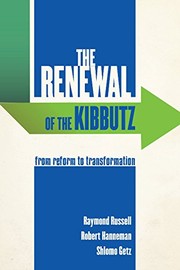
The Renewal of the Kibbutz
Raymond Russell, Robert Hanneman, Shlomo Getz · 2013
על הספר
"We think of the kibbutz as a place for communal living and working. Members work, reside, and eat together, and share income "from each according to ability, to each according to need." But in the late 1980s the kibbutzim decided that they needed to change. Reforms--moderate at first--were put in place. Members could work outside of the organization, but wages went to the collective. Apartments could be expanded, but housing remained kibbutz-owned. In 1995, change accelerated. Kibbutzim began to pay salaries based on the market value of a member's work. As a result of such changes, the "renewed" kibbutz emerged. By 2010, 75 percent of Israel's 248 non-religious kibbutzim fit into this new category. This book explores the waves of reforms since 1990. Looking through the lens of organizational theories that predict how open or closed a group will be to change, the authors find that less successful kibbutzim were most receptive to reform, and reforms then spread through imitation from the economically weaker kibbutzim to the strong."--Publisher's website.
פרטי הספר
- שנה
- 2013
- שפה
- English
- הוצאה
- Rutgers University Press
- מהדורות
- 6
- עמודים
- 192
- ISBN
- 9780813560762
מקור הנתונים: Wikidata
עוד של Raymond Russell