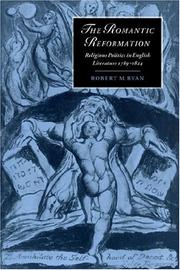
The Romantic Reformation
Robert M. Ryan · 1997
איפה לקנות
המחיר באמזון משתנה מדי יום, אז הכי נכון לראות אותו שם ברגע הקנייה.
לצפייה באמזוןזה קישור שותפים: כשקונים דרכו, האתר מקבל עמלה קטנה בלי תוספת במחיר עבורכם, וזה עוזר לנו להביא תוכן איכותי ולתחזק את האתר. בתור שותפים של Amazon אנחנו מרוויחים מרכישות מתאימות.
על הספר
This is the first book to examine the literature of the Romantic period as a conscious attempt to influence the religious life of society. Robert Ryan argues that the political quarrel that preoccupied England during the Romantic period was in large part an argument about the religious character of the nation, and the the Romantics became active and conspicuous participants inthis public debate. Where critics have traditionally viewed the Romantics as creative metaphysicians articulating private visions of a transcendent order in detachment from actual social conflict, Ryan shows instead how their religious prescriptions were formulated in response to specific historical and social circumstances. The writers of the time, driven by a dissatisfaction with the major religion of the day, devoted their talents to a subversion or revision of coercive systems of belief and assumed positions of leadership in a struggle for liberty of imagination in the religious sphere. This book shows how the careers of Blake, Wordsworth, Byron, Keats, and the Shelleys are radically reconfigured when viewed in the context of the period's passionate debate on religion, politics, and society.
המשפט הראשון: Shelley's perception of an intimate, necessary connection between politics and religion as forces for social change and his assumption that imaginative literature participated in the enterprise of political and religious reformation were shared by other writers of the time, even by those who did not sympathize with the radical politics that colored Shelley's optimism.
פרטי הספר
- שנה
- 1997
- שפה
- English
- הוצאה
- Cambridge University Press
- מהדורות
- 1
- עמודים
- 304
- ISBN
- 9780521604543
מקור הנתונים: Wikidata