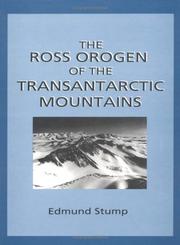
The Ross orogen of the Transantarctic Mountains
Edmund Stump · 1995
על הספר
During the period from the Neoproterozoic to the early Paleozoic, numerous continental fragments in the Southern Hemisphere consolidated along a series of interconnected orogenic belts to form the supercontinent Gondwanaland. The Ross orogen of the Transantarctic Mountains is the part of the orogenic system that formed at the Pacific continental margin of present-day Antarctica. According to one hypothesis, which is perhaps among the most significant recent developments in regional tectonics, this continental margin was created by the rifting and subsequent drift of Laurentia from Gondwanaland. With an unparalled breadth and depth of information, this book provides a detailed synthesis of the history of the Ross orogen, which commenced in the Neoproterozoic with passive margin sedimentation and progressed through a series of tectonic events that culminated in the Ross orogeny approximately 500 million years ago. In doing so, it incorporates classical studies with discussions of the most recent and controversial research from the international community. The book also includes a comprehensive bibliography and a historical chronology of all expeditions that have worked on the Ross orogen, from the first sightings by Ross in 1840 to the present. This review will be valuable to all geologists interested in these episodes in the earth's history and to researchers of the geology of Antarctica.
המשפט הראשון: Spanning the continent of Antarctica for 3,500 km and rising to heights in excess of 4,000 m, the Transantarctic Mountains are among the great mountain ranges on earth.
פרטי הספר
- שנה
- 1995
- שפה
- English
- הוצאה
- Cambridge University Press
- מהדורות
- 1
- עמודים
- 304
- ISBN
- 9780521019996
מקור הנתונים: Wikidata