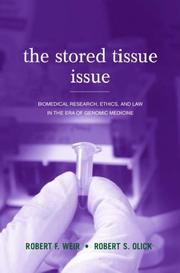
The stored tissue issue
Robert F. Weir · 2004
איפה לקנות
בדקו את המחיר העדכני באמזון. אנחנו לא מציגים מחירים כי הם משתנים מדי יום.
לצפייה באמזוןקישור שותפים. בתור שותפים של Amazon אנחנו מרוויחים מרכישות מתאימות.
על הספר
"Genetics research with stored human tissues provides many benefits and holds much promise. Yet how this critical research is conducted sometimes raises serious ethical, legal, and social concerns, and it is difficult to balance the promise of biomedical research with our time-honored commitments to individual choice in such fundamental matters as control over personal health information and the disposition of our bodily tissues." "Weir and Olick provide a analysis of this critical phase in the era of genomic medicine. While strongly supportive of the biomedical research enterprise, they develop a critique of many common research practices with banked tissues, DNA, and genetic data. Noting numerous examples of beneficial human tissue research, they focus on problematic research practices, controversial cases, and federal and institutional policies that limit the informed choices of patients and research participants. The authors offer a series of recommendations intended to limit the risk of inadequate informed consent to research for individuals, families, and groups, and to strengthen the bonds of trust between the research enterprise and the public upon which biomedical progress depends." "This book offers information plus recommendations that will be of keen interest to geneticists, other biomedical scientists, research institutions, policy makers, students, and others. It will serve as a clarion call to move beyond traditional policies and practices toward a richer understanding of partnership between patients and research participants and the biomedical research enterprise - a partnership for the benefit of all."--BOOK JACKET.
פרטי הספר
- שנה
- 2004
- שפה
- English
- הוצאה
- Oxford University Press, USA
- מהדורות
- 1
- עמודים
- 366
- ISBN
- 9780195123685
מקור הנתונים: Wikidata
עוד של Robert F. Weir