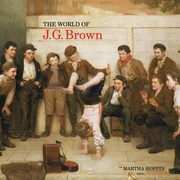
The World Of J G Brown
Martha Hoppin · 2011
על הספר
John George Brown (b. 1831) was one of the most popular American artists of the later nineteenth century and a prominent fixture in the New York art world. His wide-spread appeal and his financial success were legendary. In 1882, Harper's Weekly declared, "We have no more popular artist in America than J.G. Brown. He is more certain of his audience, and more direct in his appeal to it, than any other." Brown painted two worlds, the rural and the urban. His scenes of children playing in the countryside resemble works by his contemporaries, Winslow Homer and Eastman Johnson. His innovative urban scenes represent the impoverished children who swept crossings, shined shoes, played music, and sold flowers and apples on New York City's streets. During a career that spanned over fifty years--from the Civil War to World War I--he expressed his personal faith in freedom and self-reliance. These, and his passion for storytelling, were the threads that united his worlds. Brown was, and is still, most associated with the image of the entrepreneurial young bootblack--the artistic counterpart of Horatio Alger's boy heroes. Many of the children Brown depicted came from immigrant families. He had himself emigrated from England in 1853 as a poor young man, an experience that gave him a unique perspective. In addition to portraying young merchants at work, Brown often showed poor children pursuing the same activities that rich people might. His street urchins make music; they play card games; they imitate politicians by giving speeches, and art collectors by admiring objects pulled from the trash. These situations convey both humor and a sense of their subjects' inherent goodness. Although best known for his images of children, Brown also painted portraits and landscapes, Grand Manan Island fishermen, and elderly farmers and their wives. Wealthy collectors bought his paintings, and ordinary citizens bought the prints made after them. He is still widely collected today. While many artists disdained the business of art, Brown embraced it unapologetically--regularly applying for copyrights and encouraging the marketing of his work through reproductions. Much of his success depended on how actively he pursued opportunities to show his work. New York offered plenty of venues, including commercial galleries, private clubs, special exhibitions, and receptions held at artists' studios. Brown took advantage of them all. His paintings were probably on view more regularly, at a greate
פרטי הספר
- שנה
- 2011
- שפה
- English
- הוצאה
- Chameleon Books
- מהדורות
- 1
- עמודים
- 260
- ISBN
- 9780915829811
מקור הנתונים: Wikidata