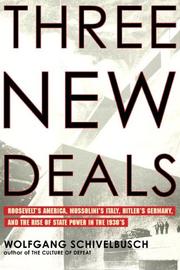
Three New Deals
Wolfgang Schivelbusch · 2006
על הספר
Today FDR's New Deal is regarded as the democratic ideal, the positive American response to the economic crisis that propelled Germany and Italy toward Fascism. Yet in the 1930s, these regimes were hardly considered antithetical. Cultural historian Schivelbusch investigates their shared elements to offer an explanation for the popularity of Europe's totalitarian systems. Returning to the Depression, he traces the emergence of a new type of populist and paternalist state: bolstered by mass propaganda, led by a charismatic figure, and projecting stability and power. He uncovers stunning similarities: the symbolic importance of gigantic public works programs like the TVA dams and the German Autobahn, which not only put people back to work but embodied the state's authority; the seductive persuasiveness of Roosevelt's fireside chats and Mussolini's radio talks; the vogue for monumental architecture stamped on Washington, as on Berlin; and the omnipresent banners enlisting citizens as loyal followers of the state.--From publisher description.
פרטי הספר
- שנה
- 2006
- שפה
- English
- הוצאה
- Picador
- מהדורות
- 2
- עמודים
- 256
- ISBN
- 9780312427436
מקור הנתונים: Wikidata
עוד של Wolfgang Schivelbusch