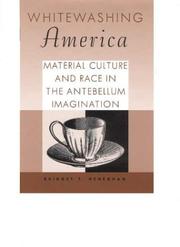
Whitewashing America
Bridget T. Heneghan · 2007
על הספר
"Bridging literary scholarship, archaeology, history, and art history, Whitewashing America: Material Culture and Race in the Antebellum Imagination explores how material goods shaped antebellum notions of race, class, gender, and purity." "Along with analyzing physical materials, Heneghan examines the nineteenth-century citizens' increasing concerns with cleanliness, dental care, and complexion. These hygienic concepts, Heneghan argues, became the means by which whiteness was codified as morally superior." "Early nineteenth-century authors participated in this material economy as well, building their literary landscapes in the same way their readers furnished their households and manipulating the understood meanings of things into political statements." "Such writers as James Fenimore Cooper and John Pendleton Kennedy use setting descriptions to insist on segregation and hierarchy. Such authors as Harriet Beecher Stowe, Nathaniel Hawthorne, Edgar Allan Poe, and Herman Melville struggled to negotiate messages of domesticity, body politics, and privilege according to complex agendas of their own. Challenging the popular notions, such slave narrators as Frederick Douglass and Harriet Jacobs wielded white objects to reverse the perspective of their white readers and, at times, to mock their white middle-class pretensions."--Jacket.
פרטי הספר
- שנה
- 2007
- שפה
- English
- הוצאה
- University Press of Mississippi
- מהדורות
- 4
- עמודים
- 224
- ISBN
- 9781934110997
מקור הנתונים: Wikidata