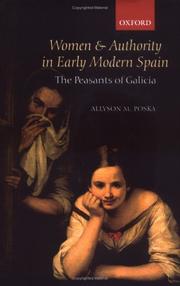
Women and authority in early modern Spain
Allyson M. Poska · 2005
על הספר
"Women and Authority in Early Modern Spain explores how peasant women in Galicia in north-western Spain came to have significant social and economic authority in a region characterized by extremely high rates of male migration. Using a wide array of archival documentation, including inquisition records, wills, dowry contracts, folklore, and court cases. Poska examines how peasant women asserted and perceived their authority within the family and the community and how the large numbers of female-headed households in the region functioned in the absence of men. From sexual norms to property acquisition, Galician peasant women consistently defied traditional expectations of women's behaviour."--Jacket.
המשפט הראשון: During the reign of Augustus (27 BCE-14 CE), the Greek geographer Strabo made an astounding assertion about the gender norms of the native peoples of north-western Spain: it is the custom among the Cantabrians for the husbands to give dowries to their wives, for the daughters to be left as heirs, and the brothers to be married off by their sisters.
פרטי הספר
- שנה
- 2005
- שפה
- English
- הוצאה
- Oxford University Press, USA
- מהדורות
- 3
- עמודים
- 281
- ISBN
- 9780199265312
מקור הנתונים: Wikidata