A living wage
Lawrence B. Glickman · 1997
Where to buy
Amazon’s price changes daily, so the most accurate place to see it is there, at the moment you buy.
View on AmazonAbout the book
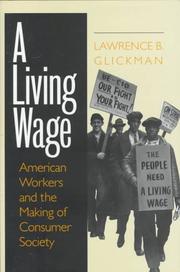
"A Living Wage," the rallying cry of union activists, is a concept with a revealing history, here documented by Lawrence B. Glickman. The labor movement's response to wages shows how American workers negotiated the transition from artisan to consumer, opening up new political possibilities for organized workers. At the same time, however, they created contradictions that continue to haunt the labor movement today. Nineteenth-century workers saw wages as dangerous, Glickman reveals, because workers hoped to become self-employed artisans rather than permanent employees. In the decades after the Civil War, organized workers began to view wage labor differently. Redefining working-class identity in consumerist terms, unions demanded a wage that would reward workers commensurate with their needs as consumers. Glickman brings the story of the living wage up to the present, clearly demonstrating how a historical perspective on the concept of a living wage can inform our understanding of current controversies.
First sentence: Between the Civil War and the 1930s, working-class attitudes toward wage labor shifted from "wage slavery" to the "living wage."
Book details
- Year
- 1997
- Language
- English
- Publisher
- Cornell University Press
- Editions
- 1
- Pages
- 240
- ISBN
- 9780801486142
Data source: Wikidata