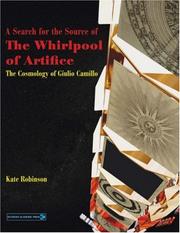
A Search for the Source of the Whirlpool of Artifice
Kate Robinson · 2005
Where to buy
Amazon’s price changes daily, so the most accurate place to see it is there, at the moment you buy.
View on AmazonAbout the book
"Giulio Camillo (1480-1544) was a poet, scientist and image-maker. Three months before he died Camillo dictated the text of his most important and secret work to his agent, Girolamo Muzio. Muzio's transcription of L'Idea del Theatro was eventually published in Florence in 1550." "Camillo's secret, revealed in L'Idea, is about man's relationship to the heavens. Camillo envisaged a living, tangible network of relationships that holds the cosmos in being. Heavenly influences, in the form of 'ecclesiastical streams', rain down on the earth. Man is as much part of the earth as he is made up of the stars. Rocks and stones, earth, flowers and trees are alive and aware of their holy origin. The skin and hair of man is receptive to the flows of heavenly love. This is not all that is contained in L'Idea for Camillo believed that it was the sun and not the earth that has pride of palce in the universe. Camillo dictated L'Idea a few months after publication of Copernicus' Revolution of the Heavenly Spheres but Camillo did not use mathematics to prove his theories. Instead his conception of the universe is of a vast array of images. Thus the heavens are described by Camillo in terms of visual signs." "Arising out of a dialogue with contemporary visual art, the aim of this work is to look at the connection between image and the art of science in the sixteenth century that produced such a man as Camillo."--BOOK JACKET.
Book details
- Year
- 2005
- Language
- English
- Publisher
- Dunedin Academic Press
- Editions
- 1
- Pages
- 154
- ISBN
- 9781903765531
Data source: Wikidata
More by Kate Robinson