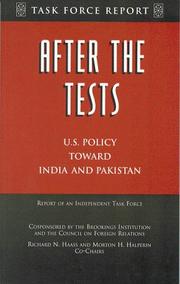
After the Tests
Morton H. Halperin · 1999
Where to buy
Amazon’s price changes daily, so the most accurate place to see it is there, at the moment you buy.
View on AmazonThis is an affiliate link: if you buy through it, the site earns a small commission at no extra cost to you, which helps us bring quality content and maintain the site. As an Amazon Associate we earn from qualifying purchases.
About the book
The spring 1998 Indian and Pakistani nuclear tests made South Asia and the world a more dangerous place, says this independent Task Force report. It recommends that the immediate objectives of U.S. foreign policy should be to encourage India and Pakistan to cap their nuclear capabilities at or near their current levels and to reinforce the global effort to stem the horizontal and vertical proliferation of nuclear weapons and advanced delivery systems. At the same time, the Task Force emphasizes that the United States has important interests in South Asia in addition to those relating to proliferation. Those include preventing conflict, promoting democracy, expanding economic growth, trade, and investment, and cooperating with India and Pakistan on global challenges. In addition to arguing for a reduction in U.S. economic sanctions, the report outlines steps India and Pakistan should take to defuse the situation in Kashmir, the issue with the greatest potential to trigger a conventional or even nuclear war. The report also suggests an agenda for China and other nations with a stake in the region's stability. Noting that India has the potential to be a major Asian power and that Pakistan can have a significant impact in Central Asia and the Persian Gulf, the report calls upon current and future U.S. presidents to assign a higher priority to both countries.
Book details
- Year
- 1999
- Language
- English
- Publisher
- Council on Foreign Relations Press
- Editions
- 1
- Pages
- 68
- ISBN
- 9780876092361
Data source: Wikidata
More by Morton H. Halperin