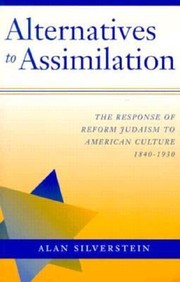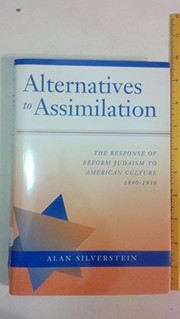
Alternatives to assimilation
Alan Silverstein · 1994
Where to buy
Amazon’s price changes daily, so the most accurate place to see it is there, at the moment you buy.
View on AmazonAbout the book
Historians have long debated whether the mid-nineteenth century American synagogue was transplanted from Central Europe or represented an indigenous phenomenon. Alternatives to Assimilation examines the Reform movement in American Judaism from 1840 to 1930 in an attempt to settle this issue. Alan Silverstein describes the emergence of organizational innovations such as youth groups, sisterhoods, brotherhoods, a professionalized rabbinate, a rabbinical college, and a national congregational body as evidence of Jews responding uniquely to American culture, in a fashion parallel to innovations in American Protestant churches. Silverstein places the developments he traces within the context of American religious and cultural history. He notes the shifting roles of American women, children, and ethnic groups as well as America's changing receptivity to trans-Atlantic cultural influences. He also utilizes census records, as well as congregational and national archives, in synthesizing a view of the Reform movement from its local temples and nationwide organizations. By offering a viable response to American culture's rampant secularization and to its pressure on Jews to relinquish their distinctive traditions and commitments, the Reform movement also inspired emerging Conservative and Orthodox Jewish movements to offer their own constituents tangible institutional alternatives to assimilation.
Book details
- Year
- 1994
- Language
- English
- Publisher
- Brandeis University Press
- Editions
- 1
- ISBN
- 9781611680881
Data source: Wikidata
More by Alan Silverstein