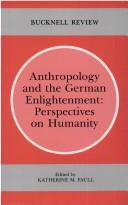
Anthropology and the German Enlightenment
Katherine M. Faull · 1995
Where to buy
Amazon’s price changes daily, so the most accurate place to see it is there, at the moment you buy.
View on AmazonAbout the book
What was the role of anthropology in the German Enlightenment? Why did this discipline emerge as one of the most popular modes of inquiry in the eighteenth century, permeating fields as disparate as aesthetics, medicine, and law? As the essays in this volume show, the "body" of Enlightenment knowledge was by no means universal. During the German Enlightenment the study of nature, humanity, and everything that humanity created was the topic of the day. But the period that defined moral reason as the sovereign human faculty also applied its scrutiny to the body that such a mind inhabited. What did it look like? Could moral superiority be deduced from physiognomy? In the massive effort to "educate" the German populace on what were seen to be the fundamental, a priori differences (physical and moral) between the sexes and the races, the European bourgeois man was considered to embody all human virtues and talents and stem from the only race and sex capable of ruling itself democratically and rationally. To examine the role of anthropology in this enterprise, contributors to this volume were asked to investigate what constitutes the German Enlightenment's interaction between its self-proclaimed rationalism and the pervasive presence of the non-rational; that is, the corporeal.
Book details
- Year
- 1995
- Language
- English
- Publisher
- Institute for Humane Studies, Incorporated
- Editions
- 2
- Pages
- 248
- ISBN
- 9780838753057
Data source: Wikidata
More by Katherine M. Faull