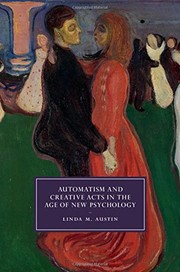
Automatism and Creative Acts in the Age of New Psychology
Linda M. Austin · 2018
Where to buy
Amazon’s price changes daily, so the most accurate place to see it is there, at the moment you buy.
View on AmazonAbout the book
"The late nineteenth century saw a re-examination of artistic creativity in response to questions surrounding the relation between human beings and automata. These questions arose from findings in the 'new psychology', physiological research that diminished the primacy of mind and viewed human action as neurological and systemic. Concentrating on British and continental culture from 1870 to 1911, this unusual study explores ways in which the idea of automatism helped shape ballet, art photography, literature, and professional writing. Drawing on documents including novels and travel essays, Linda M. Austin finds a link between efforts to establish standards of artistic practice and challenges to the idea of human exceptionalism. Austin presents each artistic discipline as an example of the same process: creation that should be intended, but involving actions that evade mental control. This study considers how late nineteenth-century literature and arts tackled the scientific question, 'Are we automata?'"-- "The late nineteenth century saw a re-examination of artistic creativity in response to questions surrounding the relation between human beings and automata. These questions arose from findings in the "new psychology," physiological research that diminished the primacy of mind and viewed human action as neurological and systemic. Concentrating on British and continental culture from 1870 to 1911, this unusual study explores ways in which idea of automatism helped shaped ballet, art photography, literature, and professional writing. Drawing on documents including novels and travel essays, Linda Austin finds a link between efforts to establish standards of artistic practice and challenges to the idea of human exceptionalism. Austin presents each artistic discipline as an example of the same process: creation that should be intended, but involving actions that evade mental control. This study considers how late nineteenth-century literature and arts tackled the scientific question, 'Are we automata?'"--
Book details
- Year
- 2018
- Language
- English
- Publisher
- Cambridge University Press
- Editions
- 4
- Pages
- 280
- ISBN
- 9781108428552
Data source: Wikidata