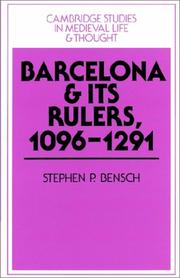
Barcelona and its rulers, 1096-1291
Stephen P. Bensch · 1995
Where to buy
Amazon’s price changes daily, so the most accurate place to see it is there, at the moment you buy.
View on AmazonAbout the book
Based on extensive archival research, this volume examines the early growth of Barcelona and the formation of its ruling classes and challenges many traditional assumptions about the nature of Mediterranean towns. Because the city emerged as a commercial centre later than its rivals, the transformation of the urban economy from a regional agricultural market into an international trading emporium is well documented and places the take-off of the European economy in a new light. Barcelona's growth consisted of two distinct phases, interrupted by a long period of stagnation: the first phase was based on market-oriented agriculture and tribute from Islamic Spain, the second on craft production, finance, and trade. Barcelona's patriciate did not emerge at the beginning of the urban revival but only during its second stage. Its rise formed part of a profound restructuring of territorial power in response to the "feudal crisis" that challenged traditional authority throughout Catalonia. As the comital dynasty gained strength, barons and knights loosened their ties to the city. Unlike many Mediterranean towns, Barcelona never fell under the sway of an urban aristocracy. Patrician families did not model themselves after noble patrilineages, but forged marital alliances in which the wife's dowry played a fundamental role.
Book details
- Year
- 1995
- Language
- English
- Publisher
- Cambridge University Press
- Editions
- 3
- ISBN
- 9780511003318
Data source: Wikidata