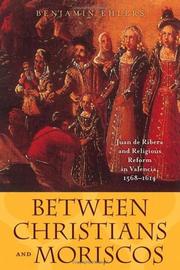
Between Christians and Moriscos
Benjamin Ehlers · 2006
Where to buy
Amazon’s price changes daily, so the most accurate place to see it is there, at the moment you buy.
View on AmazonAbout the book
In early modern Spain the monarchy's universal policy to convert all of its subjects to Christianity did not end distinctions among ethnic religious groups, but rather made relations between them more contentious. Old Christians, those whose families had always been Christian, defined themselves in opposition to forcibly baptized Muslims and Jews. Here historian Benjamin Ehlers studies the relations between Christians and moriscos in Valencia by analyzing the ideas and policies of archbishop Juan de Ribera. Juan de Ribera, a young reformer appointed to the diocese of Valencia in 1568, arrived at his new post to find a congregation deeply divided between Christians and moriscos. He gradually overcame the distrust of his Christian parishioners by intertwining Tridentine themes such as the Eucharist with local devotions and holy figures. Over time Ribera came to identify closely with the interests of his Christian flock, and his hagiographers subsequently celebrated him as a Valencian saint. Ribera did not engage in a similarly reciprocal exchange with the moriscos; after failing to effect their true conversion through preaching and parish reform, he devised a covert campaign to persuade the king to banish them. His portrayal of the moriscos as traitors and heretics ultimately justified the Expulsion of 1609--1614, which Ribera considered the triumphant culmination of the Reconquest. Ehler's sophisticated yet accessible study of the pluralist diocese of Valencia is a valuable contribution to the study of Catholic reform, moriscos, Christian-Muslim relations in early modern Spain, and early modern Europe.
Book details
- Year
- 2006
- Language
- English
- Publisher
- Johns Hopkins University Press
- Editions
- 1
- ISBN
- 9780801889240
Data source: Wikidata