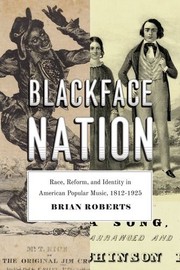
Blackface Nation
Brian Roberts · 2017
Where to buy
Amazon’s price changes daily, so the most accurate place to see it is there, at the moment you buy.
View on AmazonThis is an affiliate link: if you buy through it, the site earns a small commission at no extra cost to you, which helps us bring quality content and maintain the site. As an Amazon Associate we earn from qualifying purchases.
About the book
As the United States transitioned from a rural nation to an urbanized, industrial giant between the War of 1812 and the early twentieth century, ordinary people struggled over the question of what it meant to be American. As Brian Roberts shows in 'Blackface Nation', this struggle is especially evident in popular culture and the interplay between two specific strains of music: middle-class folk and blackface minstrelsy. The Hutchinson Family Singers, the Northeast's most popular middle-class singing group during the mid-nineteenth century, are perhaps the best example of the first strain of music. The group's songs expressed an American identity rooted in communal values, with lyrics focusing on abolition, women's rights, and socialism. Blackface minstrelsy, on the other hand, emerged out of an audience-based coalition of Northern business elites, Southern slaveholders, and young, white, working-class men, for whom blackface expressed an identity rooted in individual self-expression, anti-intellectualism, and white superiority. Its performers embodied the love-crime version of racism, in which vast swaths of the white public adored African Americans who fit blackface stereotypes even as they used those stereotypes to rationalize white supremacy. By the early twentieth century, the blackface version of the American identity had become a part of America's consumer culture while the Hutchinsons' songs were increasingly regarded as old-fashioned.
Book details
- Year
- 2017
- Language
- English
- Publisher
- University of Chicago Press
- Editions
- 2
- Pages
- 384
- ISBN
- 9780226451503
Data source: Wikidata
More by Brian Roberts