Body-Worlds
Karl Whittington · 2014
Where to buy
Check today’s price on Amazon. We do not show prices because they change daily.
View on AmazonAffiliate link. As an Amazon Associate we earn from qualifying purchases.
About the book
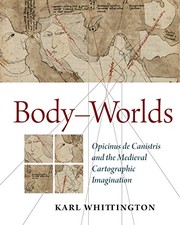
Opicinuss drawings complicate many of our assumptions about medieval visual culture, and spark lines of inquiry into the interplay of religion and science, the practice of experimentation, the operations of allegory in the fourteenth century, and ultimately into the status of representation itself. In 1334, an Italian priest named Opicinus de Canistris fell ill and experienced a divine vision of continents and oceans transformed into human figures, a vision which inspired numerous drawings. While they relate closely to contemporary maps and seacharts, religious iconography, medical illustration, and cosmological diagrams, Opicinuss drawings cannot be assimilated to any of these categories. In their beautiful strangeness they complicate many of our assumptions about medieval visual culture, and spark lines of inquiry into the interplay of religion and science, the practice of experimentation, the operations of allegory in the fourteenth century, and ultimately into the status of representation itself.
Book details
- Year
- 2014
- Language
- English
- Publisher
- Pontifical Institute of Mediaeval Studies, Department of Publications
- Editions
- 2
- Pages
- 224
- ISBN
- 9780888441867
Data source: Wikidata