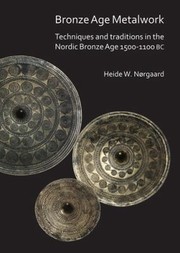
Bronze Age Metalwork
Heide W. Nørgaard · 2018
Where to buy
Amazon’s price changes daily, so the most accurate place to see it is there, at the moment you buy.
View on AmazonThis is an affiliate link: if you buy through it, the site earns a small commission at no extra cost to you, which helps us bring quality content and maintain the site. As an Amazon Associate we earn from qualifying purchases.
About the book
Bronze ornaments of the Nordic Bronze Age (neck collars, belt plates, pins and tutuli) were elaborate objects that served as status symbols to communicate social hierarchy. The magnificent metalwork studied here dates from 1500-1100 BC. An interdisciplinary investigation of the artefacts was adopted to elucidate their manufacture and origin, resulting in new insights into metal craft in northern Europe during the Bronze Age. Based on the habitus concept, which situates the craftsmen within their social and technological framework, individual artefact characteristics and metalworking techniques can be used to identify different craft practices, even to identify individual craftsmen. The conclusions drawn from this offer new insights into the complex organisation of metalcraft in the production of prestige goods across different workshops. Several kinship-based workshops on Jutland, in the Luneburg Heath and Mecklenburg, allow us to conclude that the bronze objects were a display of social status and hierarchy controlled by, and produced for, the elite - as is also seen in the workshops on Zealand. Within the two main metalworking regions, Zealand and central Lower Saxony, workshops can be defined as communities of practice that existed with an extended market and relations with the local elite.
Book details
- Year
- 2018
- Language
- English
- Publisher
- Archaeopress
- Editions
- 2
- Pages
- 500
- ISBN
- 9781789690194
Data source: Wikidata