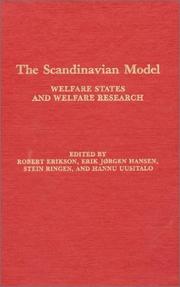
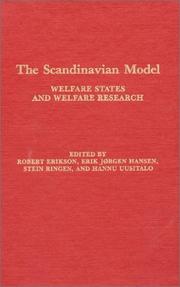
Can education be equalized?
Robert Erikson · 1996
Where to buy
Amazon’s price changes daily, so the most accurate place to see it is there, at the moment you buy.
View on AmazonThis is an affiliate link: if you buy through it, the site earns a small commission at no extra cost to you, which helps us bring quality content and maintain the site. As an Amazon Associate we earn from qualifying purchases.
About the book
Previous research suggests that in most industrial nations, including the United States, social class inequality in educational attainment has remained stable over time, despite expanding school systems. Sweden is one of the few exceptions. Contrary to the experience in many comparable societies, class differences in educational opportunities have actually decreased in Sweden during this century. In this volume, prominent sociologists test different explanations of this phenomenon, comparing the Swedish experience with that of several other industrial societies, among them the United States, Great Britain, and Germany, as well as other European nations. Addressing the long-term change in the relationship between social origin, gender, and educational attainment, the contributors analyze the role of education for future labor market positions as well as the transmission of social status across generations. Conclusions from the studies are discussed in a general theoretical framework by the editors, who suggest that the Swedish experience is best understood as the outcome of two different processes. First, it reflects an equalization in living conditions that leveled costs for higher education, and, second, it was aided by comprehensive school reform that postponed the earliest educational decisions. The editors pinpoint the mechanisms by which remaining social class differences come about and identify ones that are common to industrial societies.
Book details
- Year
- 1996
- Language
- English
- Publisher
- Westview Pr (Short Disc)
- Editions
- 1
- Pages
- 293
- ISBN
- 9780813326221
Data source: Wikidata
More by Robert Erikson