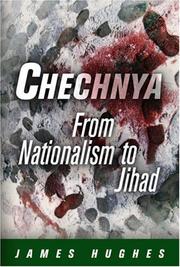
Chechnya
James Hughes · 2007
Where to buy
Check today’s price on Amazon. We do not show prices because they change daily.
View on AmazonAffiliate link. As an Amazon Associate we earn from qualifying purchases.
About the book
Conflict between Russia and Chechnya stands as an exception to the mostly peaceful breakup of the Soviet Union. Seven years into the second Russian-Chechen war, the two protagonists are now embroiled in what seems to be an unbridgeable conflict, with prospects for either a military or diplomatic solution seeming increasingly remote. Western commentators have explained this conflict as being rooted in "ancient hatreds," yet successive Russian leaders have negatively framed it as a counter-terrorism operation against bandits, terrorists, and Islamic radicals, a characterization that was coopted by the U.S.-led global War on Terror. The conflict is now widely understood as part of a global trend of resistance in Islamic societies mutating from a secular, nationalist struggle into a form that is its antithesis, jihad.^ Through a critical exploration of the most widely held assumptions about the nature of the conflict, "Chechnya: From Nationalism to Jihad" provides a comprehensive analysis of the causes and dynamics of the conflict from the collapse of the Soviet Union in 1991 to the present. Rejecting historicist explanations, the book traces the conflict's origins to the politics of nationalism and the demands for national self-determination in the region in the late 1980s. Hughes convincingly shows how the violent conflict that followed was instrumentalized by political leadership in Russia and Chechnya to consolidate authority and build popular support for their conflicting nationalist visions. Exploring recent currents in theories of nationalism, democratization, state building, and conflict, Hughes demonstrates their limitations when applied to developments in Chechnya.^ The book focuses on the conflict as a process, demonstrating that how the conflict has been fought is itself a dynamic factor that is consistently structuring and restructuring the issues at stake and the salience of the key protagonists. The conflict in Chechnya involves many of the most contentious issues in contemporary international politics. How do we differentiate between the legitimate use of violent resistance to occupation and terrorism against legitimate rule? Why do deeply divided societies sometimes descend into political violence? Under what conditions might common mechanisms of conflict management succeed? By providing us with a persuasive and challenging study, Hughes sets out indispensable lessons for other conflicts involving the volatile combination of insurgency and cou
Book details
- Year
- 2007
- Language
- English
- Publisher
- University of Pennsylvania Press
- Editions
- 4
- Pages
- 296
- ISBN
- 9780812240139
Data source: Wikidata
More by James Hughes