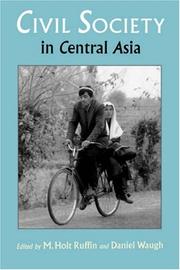
Civil society in Central Asia
M. Holt Ruffin, Daniel Clarke Waugh · 1999
Where to buy
Amazon’s price changes daily, so the most accurate place to see it is there, at the moment you buy.
View on AmazonAbout the book
"Central Asia, home of Tamerlane and the Silk Road, is a crossroads of great cultures and civilizations. In 1991 five nations at the heart of the region - Kazakstan, Kyrgyzstan, Tajikistan, Turkmenistan, and Uzbekistan - suddenly became independent from the USSR. Today they sit strategically between Russia, China, and Iran, holding some of the world's largest deposits of oil and natural gas. Long-suppressed ethnic identities are finding new expression in language, religion, the arts, international alignments - and occasional civil conflicts."--BOOK JACKET. "In the decades ahead, what kind of societies will the more than 50 million people living in Central Asia create? Single-party secular states, Islamic republics market democracies, something else?"--BOOK JACKET. "Civil Society in Central Asia is a collection of essays by scholars and activists that illuminates the social and institutional forces shaping this important region's future. Are the foundations of a democratic order emerging? As the essays suggest, trends are contradictory and vary in each country."--BOOK JACKET.
Book details
- Year
- 1999
- Language
- English
- Publisher
- University of Washington Press
- Editions
- 4
- Pages
- 331
- ISBN
- 9780295977959
Data source: Wikidata