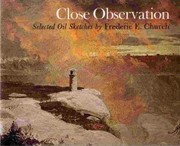
Close observation
Where to buy
Check today’s price on Amazon. We do not show prices because they change daily.
View on AmazonAffiliate link. As an Amazon Associate we earn from qualifying purchases.
About the book
Frederic E. Church is increasingly recognized today as the leading painter of the Hudson River School -- the group of optimistic, realistic landscape painters who flourished during the mid-nineteenth century (1840-1875). He is a pivotal figure, and one who influenced his contemporaries greatly. Yet even Church is known almost solely from his finished oil paintings, which are large, detailed, and panoramic, with no hint of the artist's hand visible. This book brings, for the first time, scholarly attention and the eye of the connoisseur to Church's best oil sketches (112 are discussed and illustrated). In these works, the artist is seen working directly from nature, en plein air, with great speed and emotion. The sketches are astonishingly detailed, yet fresh and sensuous in execution. The book analyzes Church's stylistic progression, his use of sketches in the creation of finished studio paintings, and the formation and decline of his own vision (and that of the Hudson River School itself) as reflected in the changing style and use of the oil sketch. The book is divided into sections according to Church's major travels and subjects: the trips to South America, 1853 and 1857; Niagara; the voyage to the north to see icebergs; the trip to Jamaica, 1865; and his year-and-a-half-long journey to Europe and the Near East, starting in the autumn of 1867. The last years of his life Church spent the winters in Mexico and the summers at "Olana" -- center of the earth -- the house he designed and built in the fotthills of the Catskills. - Jacket flap.
Book details
- Year
- 1978
- Language
- English
- Publisher
- Published by the Smithsonian Institution Press for the Smithsonian Traveling Exhibition Service
- Editions
- 3
- Pages
- 110
- ISBN
- 9780874748888
Data source: Wikidata
More by Frederic Edwin Church