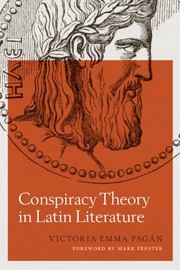
Conspiracy theory in Latin literature
Victoria Emma Pagan · 2012
Where to buy
Amazon’s price changes daily, so the most accurate place to see it is there, at the moment you buy.
View on AmazonAbout the book
Conspiracy theory as a theoretical framework has emerged only in the last twenty years; commentators are finding it a productive way to explain the actions and thoughts of individuals and societies. In this compelling exploration of Latin literature, Pagán uses conspiracy theory to illuminate the ways that elite Romans invoked conspiracy as they navigated the hierarchies, divisions, and inequalities in their society. By seeming to uncover conspiracy everywhere, Romans could find the need to crush slave revolts, punish rivals with death or exile, dismiss women, denigrate foreigners, or view their emperors with deep suspicion. Expanding on her earlier Conspiracy Narratives in Roman History, Pagán here interprets the works of poets, satirists, historians, and orators—Juvenal, Tacitus, Suetonius, Terence, and Cicero, among others—to reveal how each writer gave voice to fictional or real actors who were engaged in intrigue and motivated by a calculating worldview. Delving into multiple genres, Pagán offers a powerful critique of how conspiracy and conspiracy theory can take hold and thrive when rumor, fear, and secrecy become routine methods of interpreting (and often distorting) past and current events. In Roman society, where knowledge about others was often lacking and stereotypes dominated, conspiracy theory explained how the world worked. The persistence of conspiracy theory, from antiquity to the present day, attests to its potency as a mechanism for confronting the frailties of the human condition.
Book details
- Year
- 2012
- Language
- English
- Series
- Ashley and Peter Larkin series in Greek and Roman culture
- Publisher
- University of Texas Press
- Editions
- 1
- Pages
- 200
- ISBN
- 9780292739727
Data source: Wikidata