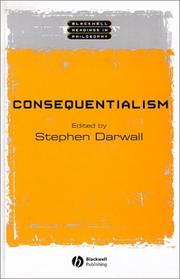
Contractarianism, Contractualism
Stephen L. Darwall · 2002
Where to buy
Amazon’s price changes daily, so the most accurate place to see it is there, at the moment you buy.
View on AmazonThis is an affiliate link: if you buy through it, the site earns a small commission at no extra cost to you, which helps us bring quality content and maintain the site. As an Amazon Associate we earn from qualifying purchases.
About the book
"Contractarianism and contractualism are instances of a major approach to normative ethical theory that stresses reciprocity and mutual consent. 'Contractarianism' is the name given to the idea, first broached by Thomas Hobbes, that morality can be viewed as a set of social practices that self-interestedly rational actors "adopt" in their common interest, as if by a kind of contract. 'Contractualism' refers, on the other hand, to a related, but importantly different idea, found first in the thought of Rousseau and Kant, that morality consists of principles that mediate relations of mutual respect between free and equal persons. In both instances, morality is modeled on a kind of agreement or contract, with the difference that contractarians think that the underlying motivation is rational self-interest whereas contractualists believe it is mutual respect between equals." "Contractarianism/Contractualism collects, for the first time, both major classical sources and central contemporary discussions of these important approaches to philosophical ethics. In addition to Hobbes, Rousseau, and Kant, it includes work from David Gauthier, Gilbert Harman, John Rawls, T.M. Scanlon, and Gary Watson. Edited and introduced by Stephen Darwall, these readings are essential for anyone interested in normative ethics."--Jacket.
First sentence: [1] Concerning the thoughts of man, I will consider them first singly, and afterwards in train, or dependence upon one another.
Book details
- Year
- 2002
- Language
- English
- Publisher
- Blackwell Publishing Limited
- Editions
- 2
- Pages
- 352
- ISBN
- 9780631231103
Data source: Wikidata
More by Stephen L. Darwall