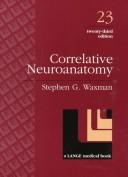
Correlative Neuroanatomy
Stephen G. Waxman · 1995
Where to buy
Amazon’s price changes daily, so the most accurate place to see it is there, at the moment you buy.
View on AmazonAbout the book
Table of Contents Part I: Basic Principles. 1. Fundamentals of the Nervous System. 2. Elements of Nervous Tissue. 3. Signaling in the Nervous System. Part II: Introduction to Clinical Thinking. 4. Introduction to Clinical Thinking: The Relationship Between Neuroanatomy and Neurology. Part III: Spinal Cord & Spine. 5. The Spinal Cord. 6. The Spinal Cord in Situ: Imaging. Part IV: Anatomy of the Brain. 7. The Brain Stem & Cerebellum. 8. Cranial Nerves & Pathways. 9. Diencephalon. 10. Cerebral Hemispheres/Telencephalon. 11. Ventricles & Coverings of the Brain. 12. Vascularization. Part V: Functional Systems. 13. Control of Movement. 14. Somatosensory Systems. 15. The Visual System. 16. The Auditory System. 17. The Vestibular System. 18. Reticular Formation. 19. The Limbic System. 20. The Autonomic Nervous System. 21. Higher Cortical Function. 22. Aging, Degeneration, & Regeneration. Part VI: Diagnostic AIDS. 23. Imaging of the Brain. 24. Electrodiagnostic Tests. Part VII: Discussion of Cases.
First sentence: The most rostral part of the nervous system (cerebrum, or forebrain) is the most phylogenetically advanced and is responsible for the most complex functions (eg, cognition).
Book details
- Year
- 1995
- Language
- English
- Publisher
- Appleton & Lange
- Editions
- 3
- Pages
- 413
- ISBN
- 9780838514771
Data source: Wikidata
More by Stephen G. Waxman