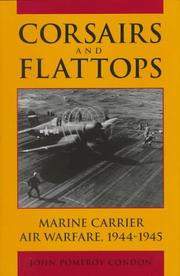
Corsairs and flattops
John P. Condon · 1998
Where to buy
Amazon’s price changes daily, so the most accurate place to see it is there, at the moment you buy.
View on AmazonThis is an affiliate link: if you buy through it, the site earns a small commission at no extra cost to you, which helps us bring quality content and maintain the site. As an Amazon Associate we earn from qualifying purchases.
About the book
Today, U.S. Marine infantry and armored units can count on timely and effective close air support thanks in part to the intrepid Marine pilots and crews who pioneered carrier-based air support of amphibious landings in the final push to defeat Japan in World War II. This little-known part of the Pacific campaign is explored fully for the first time in this detailed history by one of the program's architects. This absorbing study traces the hurried training and deployment and the carrier combat operations of eighteen Marine F4U Corsair fighter squadrons from late 1944 through March 1945. Based on extensive interviews with pilots and enlisted crew, official records, and his own experience, John Condon describes heart-stopping dogfights, attacks against shipping, and strikes deep into Japan's heartland - as well as costly mistakes in the air and around the carriers. His analysis of the Corsairs' participation in the battles for Iwo Jima, Okinawa, Indochina, the Philippines, and Tokyo includes lessons learned about weather, night flying, tactics, squadron organization, and carrier launch and recovery. Special sections cover the Wasp and Franklin disasters and the controversies surrounding the tragic lack of close air support at Tarawa and Iwo Jima.
Book details
- Year
- 1998
- Language
- English
- Publisher
- US Naval Institute Press
- Editions
- 1
- Pages
- 138
- ISBN
- 9781557501271
Data source: Wikidata