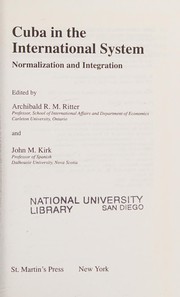
Cuba in the international system
Archibald R. M. Ritter, John M. Kirk · 1995
Where to buy
Amazon’s price changes daily, so the most accurate place to see it is there, at the moment you buy.
View on AmazonAbout the book
With the demise of the Soviet Union in 1989, many had predicted the end of the Cuban revolution. Yet Havana has survived, in no small degree because of its ability to forge new international partnerships while strengthening its relationship with other countries. At present it enjoys diplomatic relations with some 150 nations, an extraordinary feat for a country which not long ago was widely presented as an international pariah. This collection of essays, written by the world's leading Cuba-watchers, seeks to analyze the strategies pursued by policymakers in Havana in developing this dramatically new policy. Following an assessment of the degree of change introduced in revolutionary Cuba in recent years, the specialists examine the astonishing reintegration of Cuba in international circles, and study the nature of the one area where the impasse continues - the Washington-Havana axis. This is an astonishing story of adaptation to a formerly hostile world, as the Cuban revolution has sought to survive by pursuing a totally different path.
Book details
- Year
- 1995
- Language
- English
- Publisher
- Palgrave Macmillan
- Editions
- 1
- Pages
- 294
- ISBN
- 9780312126537
Data source: Wikidata
More by Archibald R. M. Ritter