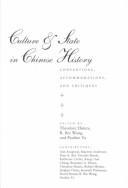
Culture & state in Chinese history
Theodore Huters, Roy Bin Wong, Pauline Yu · 1997
Where to buy
Amazon’s price changes daily, so the most accurate place to see it is there, at the moment you buy.
View on AmazonAbout the book
Many observers of late imperial China have noted the relatively small size of the state in comparison to the geographic size and large population of China and have advanced various theories to account for the ability of the state to maintain itself in power. One of the more enduring explanations has been that the Chinese state, despite its limited material capacities, possessed strong ideological powers and was able to influence cultural norms in ways that elicited allegiance and responded to the desire for order. The fourteen papers in this volume re-examine the assumptions of how state power functioned, particularly the assumption of a sharp divide between state and society. The general conclusion is that the state was only one actor - albeit a powerful one - in a culture that elites and commoners could shape, either in cooperation with the state or in competition with it. The temporal range of the papers extends from the twelfth to the twentieth century, though most of the papers deal with the Ming and Qing dynasties.
Book details
- Year
- 1997
- Language
- English
- Publisher
- Stanford University Press
- Editions
- 2
- Pages
- 516
- ISBN
- 9780804728676
Data source: Wikidata
More by Theodore Huters