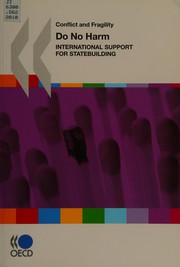
Do no harm
Organisation for Economic Co-operation and Development · 2010
Where to buy
Check today’s price on Amazon. We do not show prices because they change daily.
View on AmazonAffiliate link. As an Amazon Associate we earn from qualifying purchases.
About the book
Despite the best of intentions, donors can inadvertently undermine statebuilding processes. When the resources they deliver or the reforms they advocate weaken rather than strengthen the state's decision- and policy-making functions, their efforts can do more harm than good. Donors can also do harm by creating a brain drain away from state organizations - for instance, by hiring the most qualified civil servants. When aid is delivered in a way that actually acts as a disincentive to states to consolidate their own revenue base, this can slow the development of the state's own capacity. How can donors ensure they do no harm? How can they be sure they intervene constructively in fragile situations? This publication provides practical guidance based on the results of research undertaken on behalf of the OECD DAC International Network on Conflict and Fragility (INCAF). The book is based on comparative case studies of six countries (Afghanistan, Bolivia, Democratic Republic of Congo, Nepal, Rwanda and Sierra Leone) and a comprehensive literature review. It addresses how the interventions of OECD countries may risk undermining positive statebuilding processes, and makes recommendations as to how this may be avoided in the future.--Publisher's description.
Book details
- Year
- 2010
- Language
- English
- Series
- Conflict and fragility
- Publisher
- OECD
- Editions
- 1
- Pages
- 198
- ISBN
- 9789264077386
Data source: Wikidata
More by Organisation for Economic Co-operation and Development