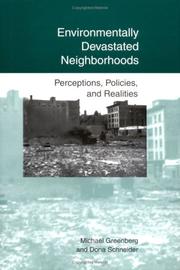
Environmentally devastated neighborhoods
Michael R. Greenberg · 1996
Where to buy
Amazon’s price changes daily, so the most accurate place to see it is there, at the moment you buy.
View on AmazonThis is an affiliate link: if you buy through it, the site earns a small commission at no extra cost to you, which helps us bring quality content and maintain the site. As an Amazon Associate we earn from qualifying purchases.
About the book
Only 3% of all Americans believe they live in bad neighborhoods. But 30% to 45% of those who live in places with crime and illegal drug sales, rats and stray dogs, hazardous waste sites, factory pollution, and abandoned and blighted buildings rate their neighborhood as poor quality. Even when these neighborhoods have good schools, parks, and other amenities, their resident's ratings do not go up. This holds true no matter who is asked - young, old, men or women, middle class, working class, or on welfare. Local health and planning officials corroborate resident perceptions. It is particularly noticeable that stress from living near a toxic waste site - the hazard that gets the biggest attention in terms of dollars spent - is low on the resident's list of fears about their neighborhoods. They'd much prefer to see the money put to fixing the immediate dangers on their block. But because federal and state government policies for protecting public health, lowering crime, and saving the environment are divided into separate bureaucratic cubby-holes, effective planning to improve these stressed neighborhoods is difficult. Beginning with the call for a definition of "environment" that fits the realities of these places, the authors argue for and propose policy initiatives that address all the desperate needs of these beleaguered neighborhoods. . This book is essential reading for students, academics, and professionals in environmental studies, public health, urban studies and planning, as well as grassroots community organizers.
Book details
- Year
- 1996
- Language
- English
- Publisher
- Rutgers University Press
- Editions
- 1
- ISBN
- 9780585029290
Data source: Wikidata
More by Michael R. Greenberg