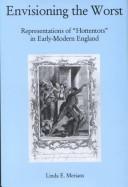
Envisioning the worst
Linda Evi Merians · 2001
Where to buy
Amazon’s price changes daily, so the most accurate place to see it is there, at the moment you buy.
View on AmazonThis is an affiliate link: if you buy through it, the site earns a small commission at no extra cost to you, which helps us bring quality content and maintain the site. As an Amazon Associate we earn from qualifying purchases.
About the book
"This book investigates how the early-modern English came to envision "Hottentots" as humanity's most base and beastly people.". "The descriptions of Africa's southern-most people that appear in travel narratives and collections, geography books, and other textbooks of learning written from the first contact between English sailors and the Cape Khoikhoi in 1591 until the establishment of the British Cape Colony in the 1820s only tell part of the story about the invention and construction of "Hottentots." No other indigenous society was described so negatively or appropriated for such extensive use in domestic discourses. Indeed, the countless number of literal and figurative "Hottentot" references that appear in eighteenth- and nineteenth-century journals, letters, poetry, novels, and drama, as well as in scientific, imperialist, political, and abolitionist writings demonstrate how the very idea of them figures in crucial ways in the early modern consciousness as well as in some of the period's most critical debates, especially those concerning race, nationalism, and gender.". "Tracing all the pre-colonial representations of "Hottentots" and "Hottentotism" operative in early-modern England allows us to see the birth and the development of a prejudice that became central to the nation. In their constructions of "Hottentots" the English found a way to vent their own fear, anger, and conflict about themselves and their society, particularly as they were transforming and redefining their nation as imperial Great Britain. The very invention of the "Hottentots" shows that the English needed to envision a worst people in order to imagine themselves as the world's most advanced people."--BOOK JACKET.
Book details
- Year
- 2001
- Language
- English
- Publisher
- University of Delaware Press
- Editions
- 1
- Pages
- 289
- ISBN
- 9780585437545
Data source: Wikidata