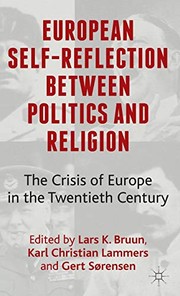
European Self-Reflection Between Politics and Religion
L. Bruun, K. Lammers, G. Sørensen · 2013
Where to buy
Amazon’s price changes daily, so the most accurate place to see it is there, at the moment you buy.
View on AmazonAbout the book
"Building on the German cultural analyst Siegfried Kracauer, the Italian microhistorian Carlo Ginzburg took up the idea of working with various optical perspectives - from close ups to long shots. Employing this differentiated approach to cultural studies, the book suggests a fresh approach to the intertwining of political and religious agonies in the period 1914-1991. In fact, the long 'European civil war' - with two world wars and a cold war - marked a paradigm shift decisively changing Europe's attitudes and ways of relating to the world. What characterises Europe is that far from being formed by a one-track development of progress and emancipation, it has followed several tracks or fault lines, creating a number of dualities and contrasts in the European self-perception such as those between secularisation and religion, and between democratic and authoritarian forms of government. The present book seeks to clarify how the 'European civil war' arose, revolving, as it did, round the fundamental question: what should Europe be?"--
Book details
- Year
- 2013
- Language
- English
- Publisher
- Palgrave Macmillan Limited
- Editions
- 4
- ISBN
- 9781137315113
Data source: Wikidata