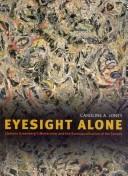
Eyesight alone
Caroline A. Jones · 2005
Where to buy
Amazon’s price changes daily, so the most accurate place to see it is there, at the moment you buy.
View on AmazonThis is an affiliate link: if you buy through it, the site earns a small commission at no extra cost to you, which helps us bring quality content and maintain the site. As an Amazon Associate we earn from qualifying purchases.
About the book
Even a decade after his death, Clement Greenberg remains controversial. One of the most influential art writers of the twentieth century, Greenberg propelled Abstract Expressionist painting-in particular the monumental work of Jackson Pollock-to a leading position in an international postwar art world. On radio and in print, Greenberg was the voice of "the new American painting," and a central figure in the postwar cultural history of the United States. Caroline Jones's magisterial study widens Greenberg's fundamental tenet of "opticality"--The idea that modernist art is apprehended through "eyesight alone"-to a broader arena, examining how the critic's emphasis on the specular resonated with a society increasingly invested in positivist approaches to the world. Greenberg's modernist discourse, Jones argues, developed in relation to the rationalized procedures that gained wide currency in the United States at midcentury, in fields ranging from the sense-data protocols theorized by scientific philosophy to the development of cultural forms, such as hi-fi, that targeted specific senses, one by one. Greenberg's attempt to isolate and celebrate the visual was one manifestation of a large-scale segmentation-or bureaucratization-of the body's senses. Working through these historical developments, Jones brings Greenberg's theories into contemporary philosophical debates about agency and subjectivity.--Publisher description.
Book details
- Year
- 2005
- Language
- English
- Publisher
- University Of Chicago Press
- Editions
- 3
- Pages
- 544
- ISBN
- 9780226409511
Data source: Wikidata
More by Caroline A. Jones