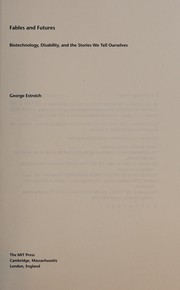
Fables and futures
George Estreich · 2019
Where to buy
Amazon’s price changes daily, so the most accurate place to see it is there, at the moment you buy.
View on AmazonThis is an affiliate link: if you buy through it, the site earns a small commission at no extra cost to you, which helps us bring quality content and maintain the site. As an Amazon Associate we earn from qualifying purchases.
About the book
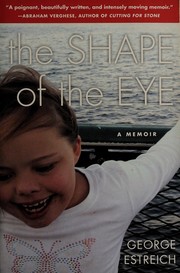
From next-generation prenatal tests, to virtual children, to the genome-editing tool CRISPR-Cas9, new biotechnologies grant us unprecedented power to predict and shape future people. That power implies a question about belonging: which people, which variations, will we welcome? How will we square new biotech advances with the real but fragile gains for people with disabilitiesespecially when their voices are all but absent from the conversation? 0This book explores that conversation, the troubled territory where biotechnology and disability meet. In it, George Estreichan award-winning poet and memoirist, and the father of a young woman with Down syndromedelves into popular representations of cutting-edge biotech: websites advertising next-generation prenatal tests, feature articles on ́three-parent IVF,́ a scientist's memoir of constructing a semisynthetic cell, and more. As Estreich shows, each new application of biotechnology is accompanied by a persuasive story, one that minimizes downsides and promises enormous benefits. In this story, people with disabilities are both invisible and essential: a key promise of new technologies is that disability will be repaired or prevented. 0In chapters that blend personal narrative and scholarship, Estreich restores disability to our narratives of technology. He also considers broader themes: the place of people with disabilities in a world built for the able; the echoes of eugenic history in the genomic present; and the equation of intellect and human value. Examining the stories we tell ourselves, the fables already creating our futures, Estreich argues that, given biotech that can select and shape who we are, we need to imagine, as broadly as possible, what it means to belong.
Book details
- Year
- 2019
- Language
- English
- Publisher
- The MIT Press
- Editions
- 4
- Pages
- 219
- ISBN
- 9780262039567
Data source: Wikidata