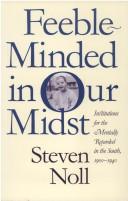
Feeble-Minded in Our Midst
Steven Noll · 1995
Where to buy
Amazon’s price changes daily, so the most accurate place to see it is there, at the moment you buy.
View on AmazonThis is an affiliate link: if you buy through it, the site earns a small commission at no extra cost to you, which helps us bring quality content and maintain the site. As an Amazon Associate we earn from qualifying purchases.
About the book
Steven Noll traces the history and development of institutions for the mentally handicapped in the South between 1900 and 1940. He examines the influences of gender, race, and class in the institutionalization process and relates policies in the South to those in the North and Midwest, regions that had established similar institutions much earlier. In addition, Noll creates a vivid portrait of life and work within institutions and the impact of institutionalization on patients and their families. At the center of the story is the debate between the humanitarians, who advocated institutionalization as a way of protecting and ministering to the mentally deficient, and public policy adherents, who were primarily interested in controlling and isolating perceived deviants. According to Noll, these conflicting ideologies meant that most southern institutions were founded without a clear mission or an understanding of their relationship to southern society at large.
First sentence: Ten southern states either opened institutions for the feeble-minded or radically changed the focus of their existing facilities during the ten-year period from 1914 to 1923 (see table I.I).
Book details
- Year
- 1995
- Language
- English
- Publisher
- University of North Carolina Press
- Editions
- 4
- Pages
- 270
- ISBN
- 9780807845318
Data source: Wikidata
More by Steven Noll