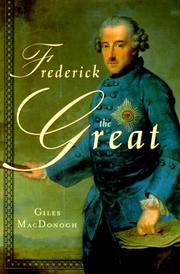
Frederick the Great
Giles MacDonogh · 1999
Where to buy
Check today’s price on Amazon. We do not show prices because they change daily.
View on AmazonAffiliate link. As an Amazon Associate we earn from qualifying purchases.
About the book
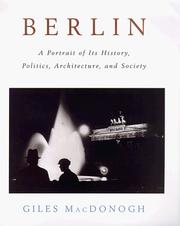
An ambitious portrait that concentrates on the enlightened monarch’s intellectual (rather than military) achievements. From an early age, Frederick the Great (1712–86) was an avid reader and flutist, much to the chagrin of his warlike, overbearing father, Frederick William I. At 18, Frederick was imprisoned and court martialled (and a friend of his was executed) for plotting to flee his father’s dull court for France, where he intended to realize his artistic and literary dreams. Having failed in his escape, Frederick had a strict regimen of political and religious study imposed on the young prince—one that served him well during the Seven Years War (when he faced, and defeated, almost all the other European powers combined). Frederick turned Prussia into a force to be reckoned with: he added territory to the kingdom, further modernized the army, encouraged religious tolerance, and implemented sweeping legal reform. But his major accomplishment as portrayed by MacDonogh (Berlin, 1998) was his patronage of the arts, particularly his correspondence with Voltaire. MacDonogh intersperses scenes of war throughout Germany with Frederick’s exchange of letters with the philosopher. The two maintained a love hate relationship for 42 years, their letters filling three volumes of Frederick’s collected writings. Voltaire, forever greedy for more royal indulgences, runs between Versailles and Potsdam—at one point being arrested at the border by Prussian soldiers who feared that he might publish some of Frederick’s more bawdy poems. Frederick, his admiration for Voltaire bordering on obsession, tolerates the philosopher even when the French king employs him as a spy. As Frederick did so much in the military arena, however, it’s impossible not to devote space to that material. MacDonogh traces Frederick’s conquests, but never with the same gusto as when he discusses his turbulent relations with intellectuals. As a result, as a military history, the work suffers in depth what it gains in breadth, with the cultural history making up for the loss.
First sentence: It is tempting to imagine that a long shudder went through Europe in 1740.
Book details
- Year
- 1999
- Language
- English
- Publisher
- Weidenfeld & Nicolson
- Editions
- 4
- Pages
- 416
- ISBN
- 9780297817772
Data source: Wikidata
More by Giles MacDonogh