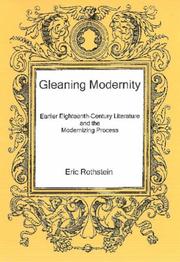
Gleaning Modernity
Eric Rothstein · 2007
Where to buy
Amazon’s price changes daily, so the most accurate place to see it is there, at the moment you buy.
View on AmazonThis is an affiliate link: if you buy through it, the site earns a small commission at no extra cost to you, which helps us bring quality content and maintain the site. As an Amazon Associate we earn from qualifying purchases.
About the book
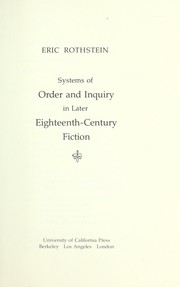
"The book asks, how could British culture have modernized so rapidly and yet with so little trauma in the eighteenth century? It hypothesizes that one reason was the growth of literature with a built-in range of reading options and the complementary growth of a readership who made active choices about how to read texts. In this climate, the characteristic eighteenth-century literary practice of writers' reinhabiting older texts and genres allowed for conservative surface continuity. At the same time it allowed readers to experience forms of cultural change in their imaginations, as simulations for experimental, familiarizing, and predictive ends in a changing environment. Different readers could apply the works in accord with their needs, desires, and predilections." "Through rigorously historical but not univocal readings of several widely familiar works, the book also argues that this literature does socially constitutive work in a way that differs from commonly made neofoucauldian, marxisant claims. Its (non-cynical) consumer-driven model, in which artworks offer variously instructive make-believe, does not require or invoke transgression, subversion, finger-wagging, or complaisance as means of social efficacy."--Jacket.
Book details
- Year
- 2007
- Language
- English
- Publisher
- University of Delaware Press
- Editions
- 4
- Pages
- 269
- ISBN
- 9780874139846
Data source: Wikidata
More by Eric Rothstein