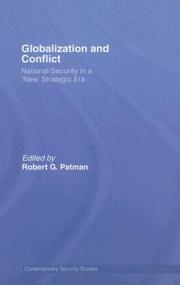
Globalization, Civil Conflict and the National Security State (Contemporary Security Studies)
R. Patman · 2006
Where to buy
Amazon’s price changes daily, so the most accurate place to see it is there, at the moment you buy.
View on AmazonAbout the book
The conventional wisdom since the suicide attacks of 9/11 is that the world has been transformed and, according to President Bush, "September 11 changed the strategic thinking" of the US. Challenging both of these assumptions, this volume highlights the gap between the new security environment and the notion of state-centered national security favored by Washington, and shows how a Cold War phenomenon known as the national security state, in which defense and foreign policy interests essentially converge, remains largely intact. Indeed, the Bush administration's National Security strategy of 2002 has reinvigorated and even extended the idea of national security. Paradoxically, the renewed emphasis on a distinctly state-centered approach to security, including the war on terror, has unfolded during an era of deepening globalization. This book is one of the first major attempts to identify what is novel and what is constant in today's strategic landscape. Drawing on the international expertise of fourteen specialists, the book examines four inter-related themes. These embrace the impact of globalization on the concept of security; the strategic outlook of the world's only superpower, the US; the new conflicts that have come to characterize the post-Cold War era; and efforts to regulate the emerging patterns of conflict in the world. This volume will be essential reading for students of strategic studies, security studies and international relations.
Book details
- Year
- 2006
- Language
- English
- Publisher
- Routledge
- Editions
- 2
- Pages
- 272
- ISBN
- 9780415359870
Data source: Wikidata