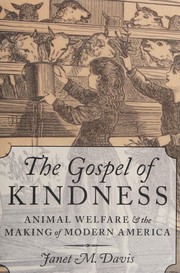
Gospel of Kindness
Janet M. Davis · 2016
Where to buy
Amazon’s price changes daily, so the most accurate place to see it is there, at the moment you buy.
View on AmazonAbout the book
"When we consider modern American animal advocacy, we often think of veganism, no-kill shelters, Internet campaigns against trophy hunting, or celebrities declaring that they would "rather go naked" than wear fur. Contemporary critics readily dismiss animal protectionism as a modern secular movement that privileges animals over people. Yet the movement's roots are deeply tied to the nation's history of religious revivalism and social reform. The Gospel of Kindness explores the broad cultural and social influence of the American animal welfare movement at home and overseas from the Second Great Awakening to the Second World War. Dedicated primarily to laboring animals at its inception in an animal-powered world, the movement eventually included virtually all areas of human and animal interaction.^ Embracing animals as brethren through biblical concepts of stewardship, a diverse coalition of temperance groups, teachers, Protestant missionaries, religious leaders, civil rights activists, policy makers, and anti-imperialists forged an expansive transnational "gospel of kindness," which defined animal mercy as a signature American value. Their interpretation of this "gospel" extended beyond the New Testament to preach kindness as a secular and spiritual truth. As a cultural product of antebellum revivalism, reform, and the rights revolution of the Civil War era, animal kindness became a barometer of free moral agency, higher civilization, and assimilation. Yet given the cultural, economic, racial, and ethnic diversity of the United States, its empire, and other countries of contact, standards of kindness and cruelty were culturally contingent and potentially controversial.^ Diverse constituents defended specific animal practices, such as cockfighting, bullfighting, songbird consumption, and kosher slaughter, as inviolate cultural traditions that reinforced their right to self-determination. Ultimately, American animal advocacy became a powerful humanitarian ideal, a barometer of inclusion and national belonging at home and abroad that endures to this day"-- "From Sarah McLachlan as spokesperson in ASPCA commercials to Animal Cops television shows, the prevention of cruelty against animals seems a core value in American society. Yet flogging horses, betting on cockfights, and shooting species of birds to extinction to adorn women's hats were once common. After the Civil War a culture of animal advocacy developed in the United States. How and why a social movemen
Book details
- Year
- 2016
- Language
- English
- Publisher
- Oxford University Press, Incorporated
- Editions
- 2
- Pages
- 320
- ISBN
- 9780199733156
Data source: Wikidata