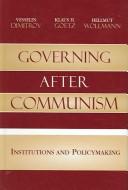
Governing After Communism
Vesselin Dimitrov · 2006
Where to buy
Amazon’s price changes daily, so the most accurate place to see it is there, at the moment you buy.
View on AmazonThis is an affiliate link: if you buy through it, the site earns a small commission at no extra cost to you, which helps us bring quality content and maintain the site. As an Amazon Associate we earn from qualifying purchases.
About the book
"This comparative analysis explores the evolution of governance in Central and Eastern Europe. The book considers post-communist leaders' key challenge: the development of central government institutions capable of coordinating, integrating, and steering the policymaking process. Building on a broad range of primary sources and extensive field research, the authors analyze the processes and outcomes of institutions-building in Hungary, Poland, the Czech Republic, and Bulgaria since the late 1980s. They examine in detail the organization and inner workings of central executives: explain differences in executive trajectories across time and countries: and show their effects on patterns of public policy, especially the budgetary process. The book also considers the influence of institutional legacies, the impact of the evolving party system, and the role of crises in spurring institutional change. Through an application of the core-executive framework, this study offers nuanced conceptual and analytical insights that will enhance understanding of both the evolving institutions of Central and Eastern Europe and the more stable West European systems. The in-depth analysis of the development of national executive institutions casts a distinctive new light on debates about EU enlargement, Europeanization, and patterns of governance."--Jacket.
Book details
- Year
- 2006
- Language
- English
- Publisher
- Rowman & Littlefield Publishers, Inc.
- Editions
- 1
- Pages
- 304
- ISBN
- 9780742540095
Data source: Wikidata