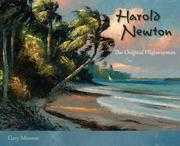
Harold Newton
Gary Monroe · 2007
Where to buy
Amazon’s price changes daily, so the most accurate place to see it is there, at the moment you buy.
View on AmazonThis is an affiliate link: if you buy through it, the site earns a small commission at no extra cost to you, which helps us bring quality content and maintain the site. As an Amazon Associate we earn from qualifying purchases.
About the book
"The Florida landscape is a drama composed of light, color, and form that hints at dark, primordial forces. Perhaps no artist has captured that dichotomy better and more prolifically than Harold Newton." "Newton sold his paintings up and down the east coast of the state at hotels, banks, doctors' offices, and anywhere else he could park his car. Often, the sale was made before the paint had time to dry. Like the other young black artists who would later become known as the Highwaymen, Newton was painting his way out of the citrus groves, the packing houses, and Jim Crow laws that fueled the despair of African Americans in 1950s Florida." "By the 1980s, Highwaymen paintings could be found scattered in untold numbers, an unwitting find at a garage sale or stumbled upon in an attic. In the years since, there has been a resurgence of interest in this band of disenfranchised blacks whose regional landscape paintings sparked an artistic movement. As the first Highwayman - and in classical terms the best - Newton's paintings are among the most highly prized. As a fellow artist once observed, "It don't have to be signed to know it's a Newton."" "This volume includes reminiscences from relatives, customers, and Highwaymen, combining the little-known story of Harold Newton's life with a selection of his paintings. Author Gary Monroe explores the appeal of this artist and provides a glimpse of mid-century African American life in the Indian River area that gave birth to the movement."--Jacket.
Book details
- Year
- 2007
- Language
- English
- Publisher
- University Press of Florida
- Editions
- 3
- Pages
- 62
- ISBN
- 9780813030425
Data source: Wikidata
More by Gary Monroe