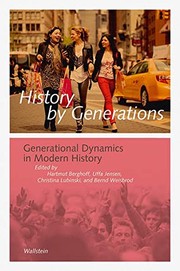
History by generations
Hartmut Berghoff, Uffa Jensen, Christina Lubinski, Bernd Weisbrod · 2013
Where to buy
Amazon’s price changes daily, so the most accurate place to see it is there, at the moment you buy.
View on AmazonThis is an affiliate link: if you buy through it, the site earns a small commission at no extra cost to you, which helps us bring quality content and maintain the site. As an Amazon Associate we earn from qualifying purchases.
About the book
The contributions to a joint conference of the Generations in Modern History graduate program of the University of Göttingen and the German Historical Institute in Washington confront the European idea of "youth generations" and "political generations" from the 1920s to the post-communist transformation with the more pragmatic American reading of demographic generations and consumer generations. The volume also deals with intellectual and political generations and with the significance of generations for demographic, economic and migration studies. In all of these cases, it seems that the generational logic is being reworked according to national agendas of belonging. Generational meanings may follow concrete biological genealogies, as in succession within family firms, or relate to more general categories of transformation, such as the cultural agenda of the Baby Boomers. But in every case, as these contributions from Europe and the U.S. show, historical time is read in generations, while history is not being made by generations.--
Book details
- Year
- 2013
- Language
- English
- Series
- Göttinger Studien zur Generationsforschung -- vol. 11
- Publisher
- Wallstein Verlag
- Editions
- 3
- Pages
- 301
- ISBN
- 9783835311626
Data source: Wikidata
More by Hartmut Berghoff